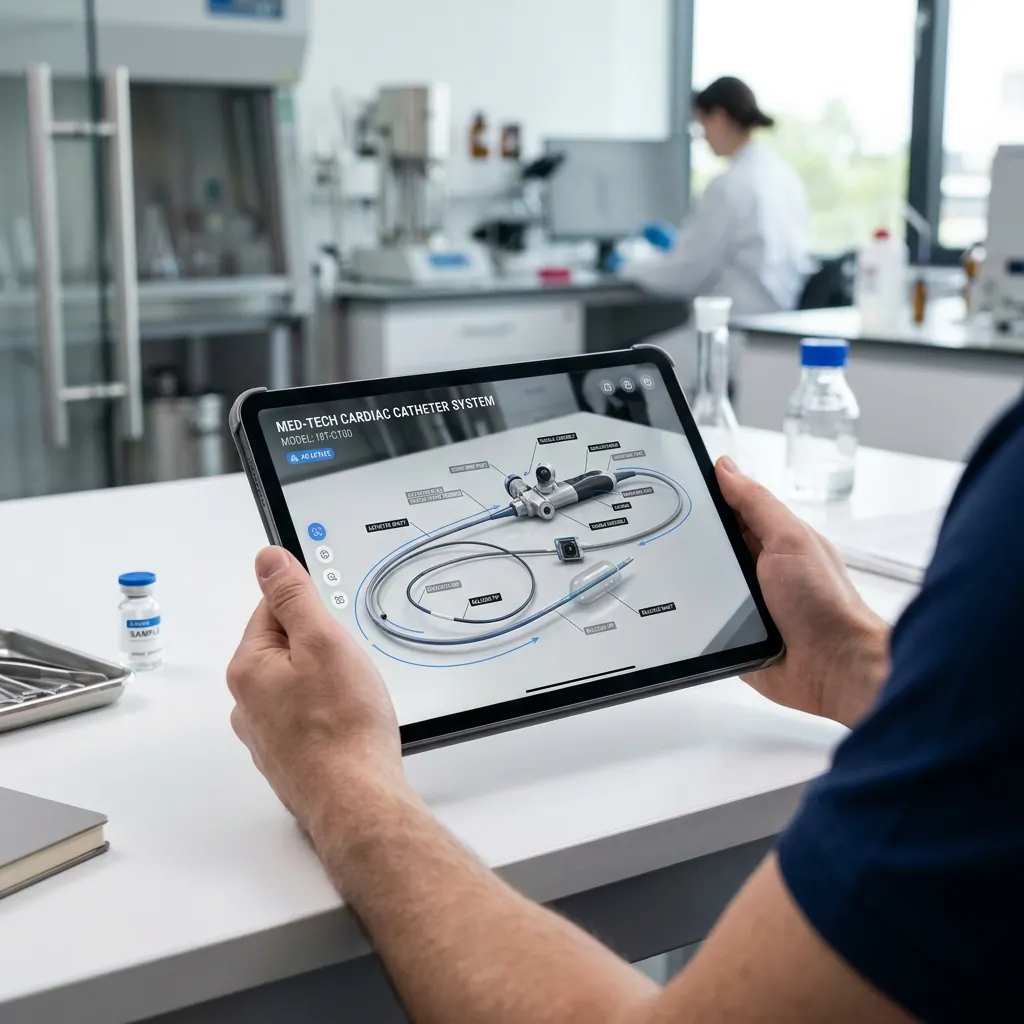
The Scenario
A product photo can be attractive. A spec sheet can be thorough. But neither answers the most important question quickly: "What does this feel like when it sits right in front of me?"
AR 3D visualization solves this. It turns an abstract concept into a physical object situated right in the viewer's environment. Whether it is industrial factory equipment, a precision motor, or a medical device, AR visualization creates immediate decision confidence.
How It Works
The viewer points their phone or tablet at an empty space, a table, a floor, or an open area. A high fidelity 3D model appears precisely positioned and scaled to the real world. They can walk around it, lean in to inspect surface materials, and even trigger animations to see internal mechanisms.
They stop asking what it is supposed to be and start reacting to how it fits into their world.
The Technical Approach
Good AR visualization begins with clean model preparation and clear interaction goals.
- Model Preparation: Source models are cleaned, optimized, and textured for smooth real time performance while preserving visual quality.
- Delivery Strategy: For instant preview, AR Quick Look on Apple and Scene Viewer on Android deliver
.usdzand.glbthrough mobile links. For advanced product workflows, dedicated iOS and Android apps can also be built. - Choreography: Interactive hotspots, exploded views, and X ray cuts guide the viewer to what matters most.
Why It Matters
AR visualization accelerates understanding. It bridges the gap between imagination and reality.
- Close B2B sales faster by carrying interactive "hardware" in your pocket.
- Reduce e commerce returns because buyers know exactly the scale they are purchasing.
- Eliminate costly physical prototypes by reviewing design variants in real scale.