The Scenario
Imagine handing someone an elegant business card, scanning it with a phone, and watching a professional 3D portfolio unfold directly on top of the card.
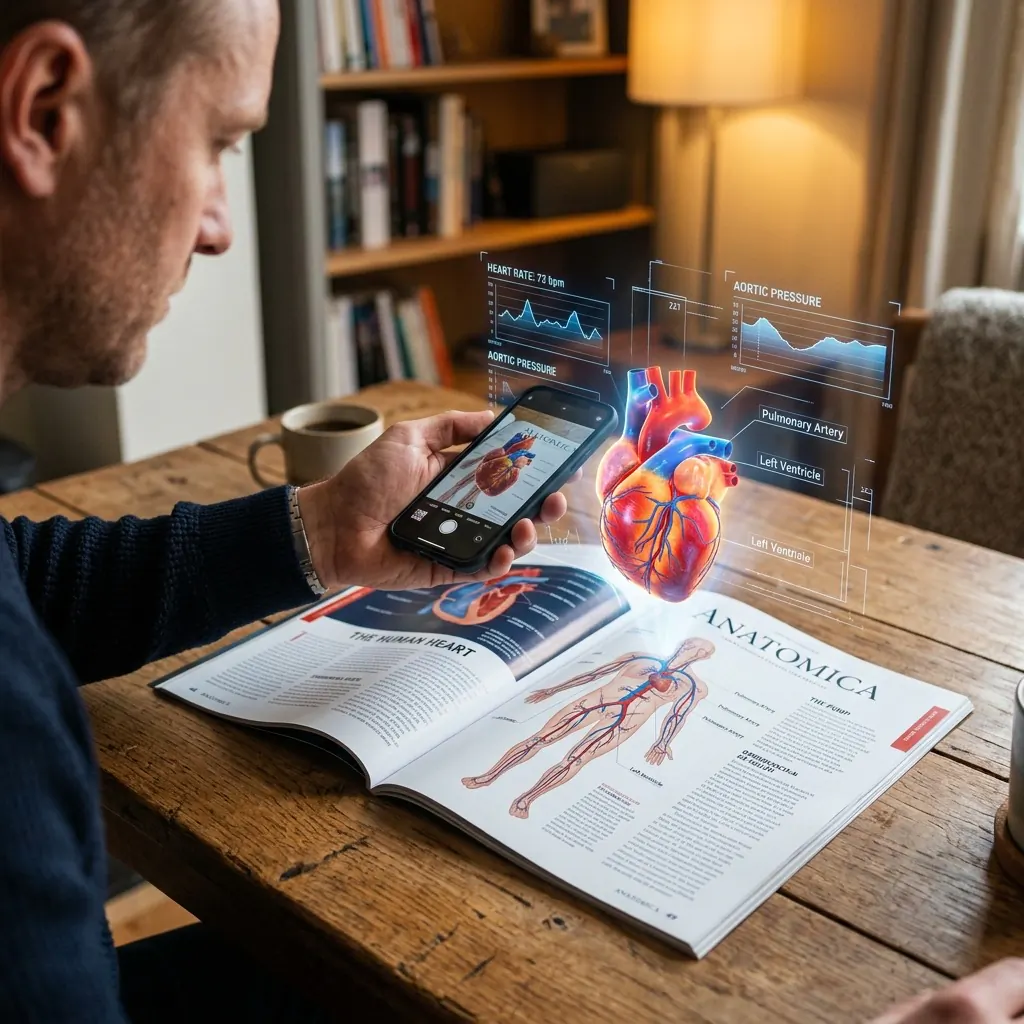
Or consider an educational textbook where scanning an anatomical diagram causes a beating 3D heart to float off the page. This is AR image tracking, the technology that fuses physical print with interactive digital content.
How It Works
The camera scans real world surfaces looking for a specific, pre registered 2D image called a "marker." Once the camera locks onto that image, whether it is a mural, a product label, or a magazine spread, it anchors digital content directly onto it. The 3D model, video, or animation seamlessly tracks the physical page even as you tilt or move it.
The Technical Approach
Strong marker tracking requires sharp contrast and careful computer vision preparation.
- Marker Analysis: Images are evaluated for high contrast, distinct features, and lack of repetitive patterns to ensure the tracking engine holds a stable lock.
- Engine Selection: Robust vision systems like AR Foundation Image Tracking and Vuforia are selected based on project goals and target devices.
- Compositing: Interactive 3D assets, holograms, or alpha channel videos are overlaid so they fuse perfectly onto the physical dimensions of the print.
Why It Matters
Image tracking radically extends the utility of physical media.
- Publishing and Education: Create "living" textbooks that update seamlessly without requiring new print runs.
- Retail Packaging: Turn a simple product label or product box into an animated brand story or interactive experience.
- Museums and Exhibitions: Provide deep, contextual 3D animations overlaying physical plaques and artifacts.