The Scenario
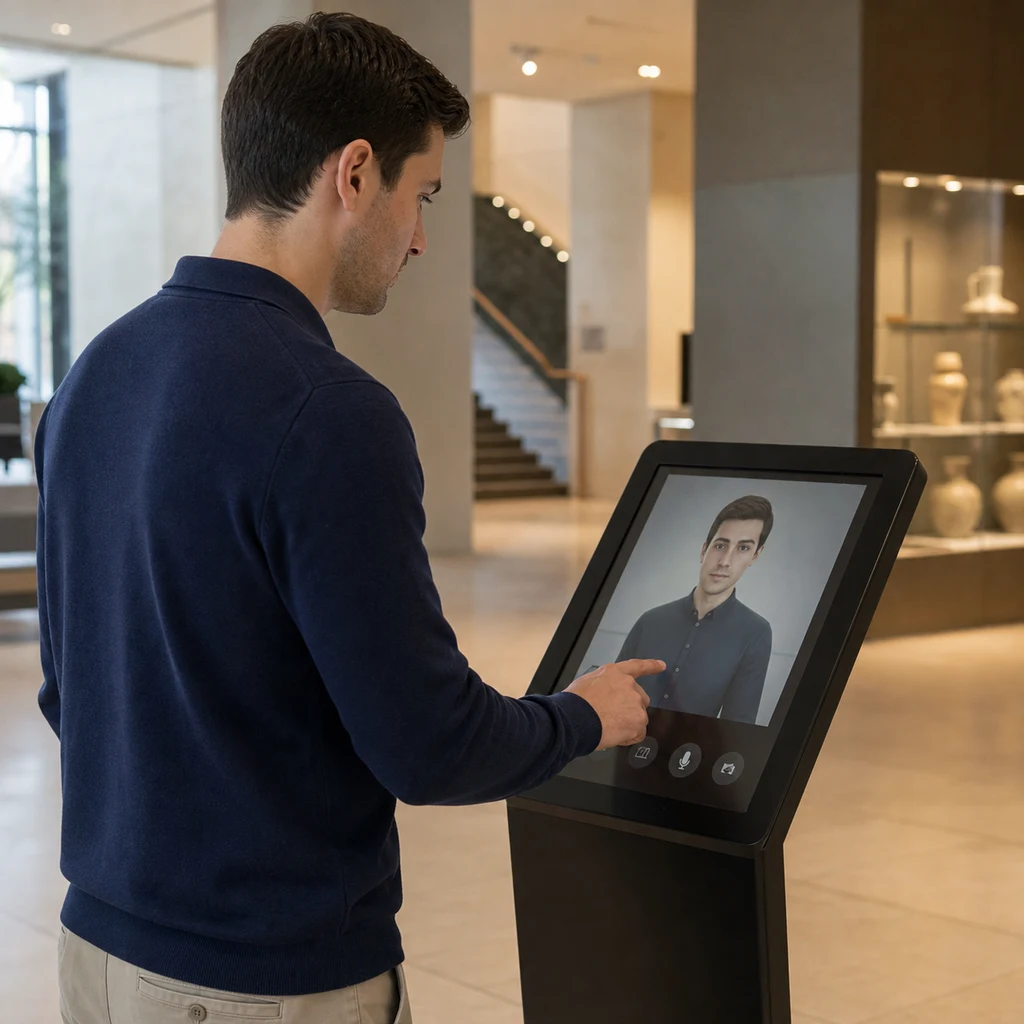
A visitor walks into a showroom and sees a small digital guide standing beside a product display. The guide greets them, explains what the product does, and answers questions in plain language.
The visitor does not need to search a brochure. They do not need to wait for staff. They simply ask, "Which version is best for a small office?" The avatar responds with an answer based on the company knowledge base.
This is where AI avatars become interesting. They are not only animated characters. They can become a friendly interface to information that is usually hidden inside documents, websites, and training material.
How It Works
An AI avatar combines three layers.
First, there is the visual character. It can be realistic, stylized, miniature, life size, or brand specific.
Second, there is the voice and animation layer. The avatar needs to speak clearly, move naturally enough to feel present, and react without feeling slow.
Third, there is the knowledge layer. This is where AI becomes useful. The avatar can answer from approved content such as product details, service information, building instructions, training guides, or frequently asked questions.
The result is a guide that can appear in AR, on a kiosk, on a website, or inside a smart glasses experience.
The Technical Approach
The important decision is not whether the avatar looks futuristic. The important decision is what it is allowed to know and say.
- Content Preparation: Business knowledge is cleaned, grouped, and prepared so answers stay accurate and useful.
- Conversation Design: The avatar is given a clear role, such as product guide, event host, training assistant, or museum explainer.
- Delivery Surface: The experience is built for the right context, such as phone based AR, a web page, a smart display, or smart glasses.
The best avatar projects start small. One place. One role. One clear job. Once the guide proves useful, the knowledge and experience can expand.
Why It Matters
AI avatars are valuable when they reduce waiting, explain complexity, and make information easier to access.
- Retail brands can create product guides that answer buying questions.
- Museums can offer interactive guides for exhibits and tours.
- Real estate teams can explain properties and amenities in a more personal way.
- Companies can train staff with a guide that answers process questions on demand.
The customer value is not the avatar itself. The value is instant explanation.
People remember experiences that help them understand faster. A good AI avatar does that by turning static information into a conversation.